Blog
Insights on AI workforce intelligence, agents, and operations.
-

How AI Is Changing the Workforce — And What Leaders Must Do Now
A practical breakdown of how AI is reshaping workforce roles, training, and planning — and what ops leaders and CTOs must prioritize to stay ahead.
-

What a Real Employee Onboarding Process Actually Requires
A practical guide for ops leaders on building an onboarding process that captures real workflows, not just checklists and forms.
-
What a Real Employee Onboarding Process Actually Requires
A practical guide for ops leaders on building an onboarding process that captures real workflows, not just checklists and forms.
-

What a Real Workforce Analytics Dashboard Should Actually Show
Most workforce analytics dashboards track headcount and tenure — here's what ops leaders and CTOs actually need to see to prevent knowledge loss.
-
How AI Is Changing the Workforce — And What Leaders Must Do Now
A practical breakdown of how AI is reshaping workforce roles, training, and planning — and what ops leaders and CTOs must prioritize to stay ahead.
-
What a Real Employee Onboarding Process Actually Requires
A practical guide for ops leaders on building an onboarding process that captures real workflows, not just checklists and forms.
-

What a Workforce Analytics Dashboard Actually Needs to Show
A guide for ops leaders on which workforce analytics metrics matter, what most dashboards miss, and how to avoid measuring the wrong things.
-
How AI Is Changing the Workforce — And What Leaders Must Do Now
A practical breakdown of how AI is reshaping workforce roles, training, and planning — and what ops leaders and CTOs must prioritize to stay ahead.
-
What a Real Employee Onboarding Process Actually Requires
A practical guide for ops leaders on building an onboarding process that captures real workflows, not just checklists and forms.
-
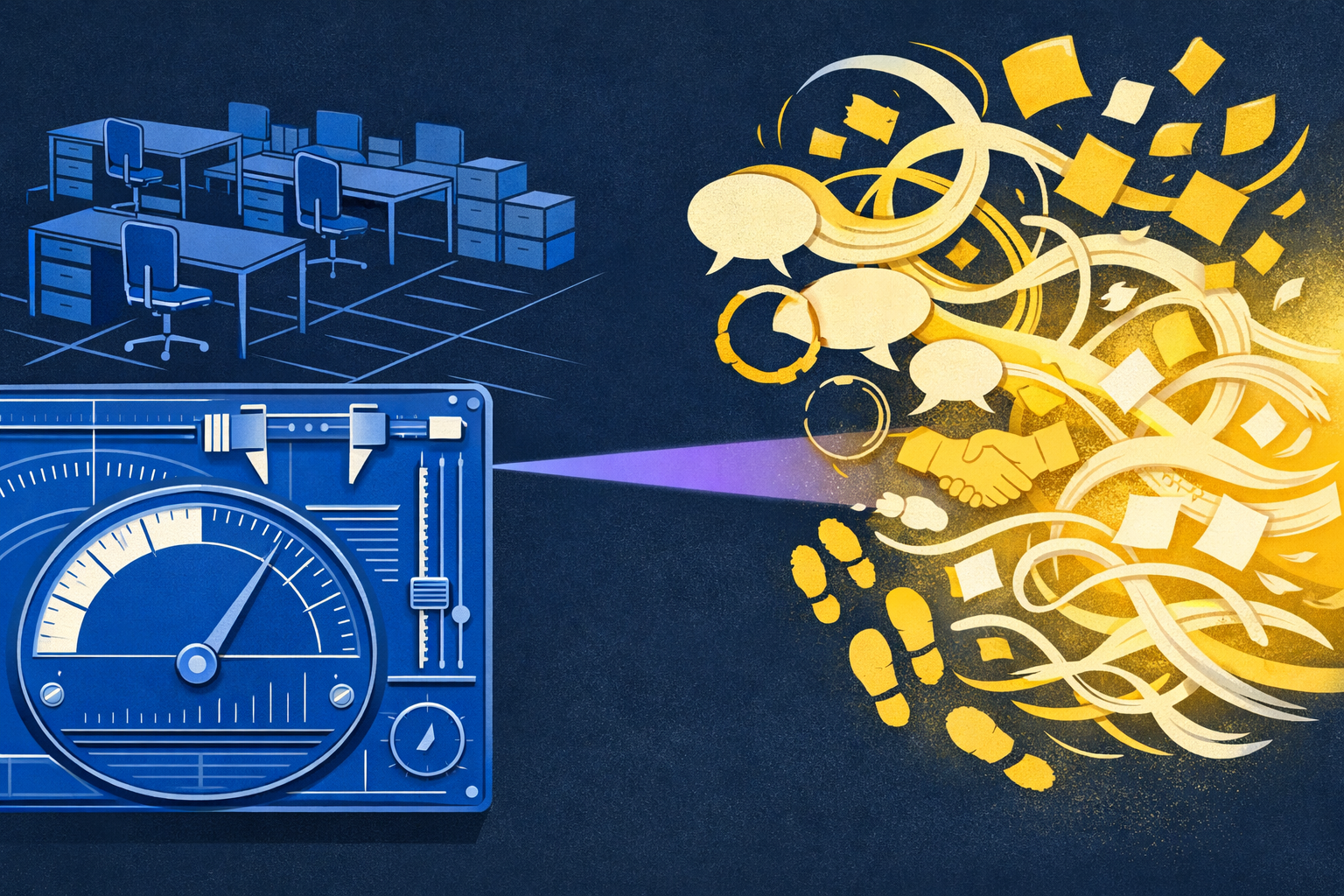
What Workforce Analytics Actually Measures (And What It Misses)
A guide for ops and L&D leaders on what workforce analytics tools capture, where they fall short, and why tribal knowledge stays invisible.
-

What an Agentic AI Workforce Actually Requires to Function
For ops leaders and CTOs: why agentic AI workforce deployments fail without real workflow data — and what training infrastructure they actually need.
-

Why Your Employee Onboarding Process Keeps Failing New Hires
A practical breakdown of why most onboarding programs miss real workflows—and what ops and L&D leaders can do to fix it.
-

Why Most Workforce Analytics Programs Fail Before They Start
For ops leaders and HR teams, a candid look at why workforce metrics and analytics initiatives stall — and what actually makes them work.
-
How AI Is Changing the Workforce — And What Leaders Must Do Now
A practical breakdown of how AI is reshaping workforce roles, training, and planning — and what ops leaders and CTOs must prioritize to stay ahead.
-
Why Your Employee Onboarding Process Keeps Failing New Hires
A practical breakdown of why most onboarding programs miss real workflows—and what ops and L&D leaders can do to fix it.
-
What Workforce Analytics Actually Measures (And What It Misses)
A guide for ops and L&D leaders on what workforce analytics tools capture, where they fall short, and why tribal knowledge stays invisible.
-
How AI Is Changing the Workforce — And What Leaders Must Do Now
A practical breakdown of how AI is reshaping workforce roles, training, and planning — and what ops leaders and CTOs must prioritize to stay ahead.
-

Why Your Employee Onboarding Programme Keeps Failing New Hires
A breakdown of why most onboarding plans, templates, and checklists miss the real problem — and what actually fixes it for ops and L&D leaders.
-

What Are Workforce Analytics? A Practical Guide for Ops Leaders
A no-fluff breakdown of workforce analytics—what it actually measures, which platforms deliver it, and where most teams go wrong.
-

Why AI Workforce Transformation Fails Without Real Workflow Data
For ops leaders and CTOs: why generic LLM training data breaks agentic AI workforce deployments—and what actually works instead.
-

Why Your Employee Onboarding Program Keeps Failing New Hires
A deep look at why even well-documented onboarding processes miss the real workflows — and what ops and L&D leaders can do differently.
-
What Workforce Analytics Actually Measures (And What It Misses)
A guide for ops and L&D leaders on what workforce analytics tools capture, where they fall short, and why tribal knowledge stays invisible.
-
How AI Is Changing the Workforce — And What Leaders Must Do Now
A practical breakdown of how AI is reshaping workforce roles, training, and planning — and what ops leaders and CTOs must prioritize to stay ahead.
-
Why Your Employee Onboarding Process Keeps Failing New Hires
A practical breakdown of why most onboarding programs miss real workflows—and what ops and L&D leaders can do to fix it.
-

What Are Workforce Analytics, Really?
For ops leaders: a clear-eyed answer to what workforce analytics actually is — and why every definition stops short of the layer that matters.
-

Agentic AI Needs a Workforce That Documented Itself First
For CTOs and ops leaders: why agentic AI workforce deployment stalls when the real workflow data it needs was never captured to begin with.
-
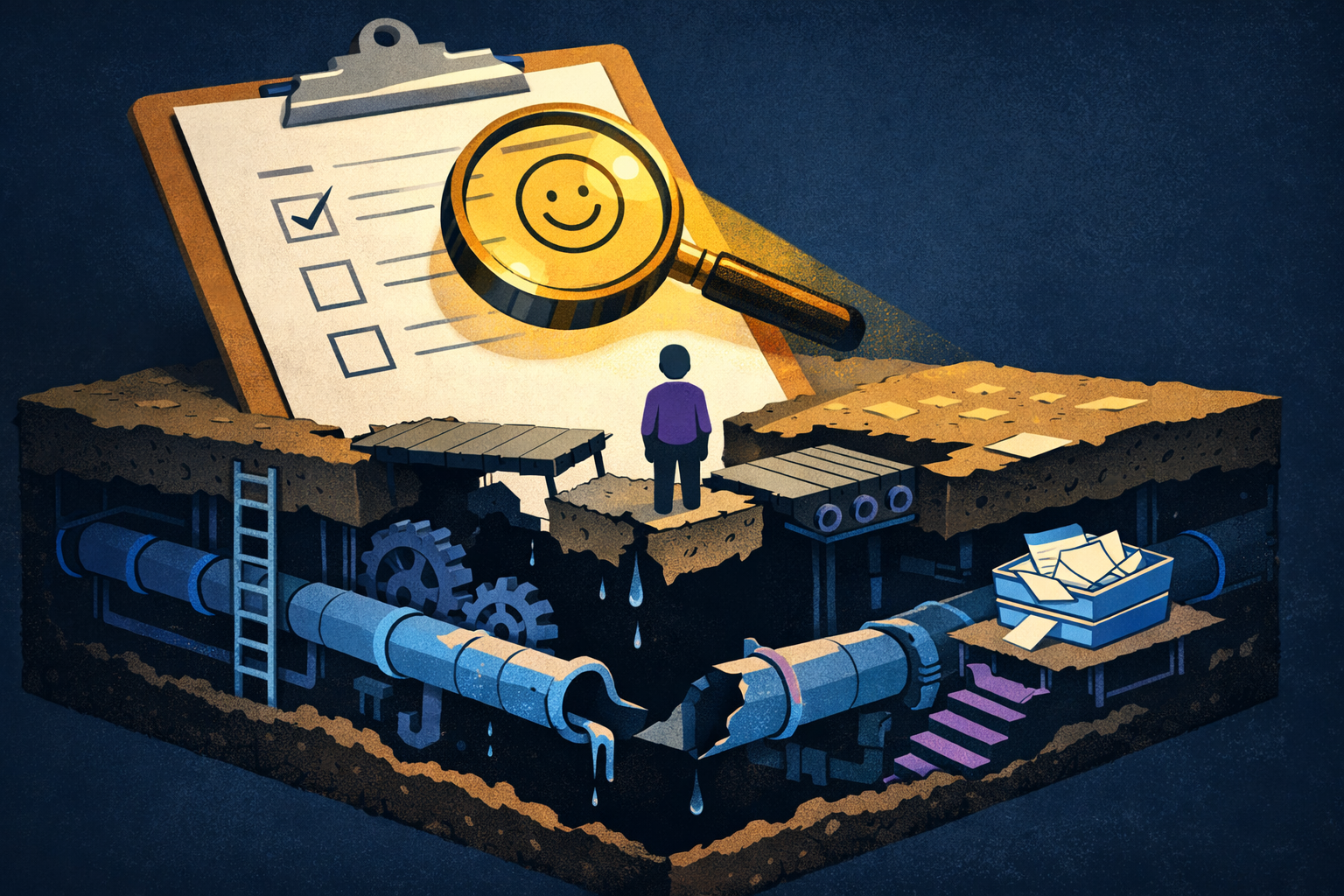
The Employee Onboarding Survey Asks the Wrong Questions
For L&D heads: why onboarding surveys, feedback forms, and experience scores measure sentiment but never surface the workflow gaps killing new hire productivity.
-

Insightful, SAP, Remote Tools: Workforce Analytics Has an Identity Crisis
For ops leaders: why workforce analytics means something different in every platform — and why none of those definitions capture what actually drives performance.
-

Generative AI Can't Fix a Workforce That Never Documented Itself
For ops leaders and CTOs: why generative AI's real workforce impact is blocked by the tribal knowledge no training act, consortium, or platform ever captured.
-

Remote Employee Onboarding Is Harder Than You Think
For L&D heads: why remote onboarding tools, schedules, and templates fail distributed hires when real workflows were never captured to begin with.
-

What Workforce Analytics Actually Measures (And What It Can't)
For ops leaders: what workforce analytics really captures across remote, SAP, and advanced platforms — and the workflow layer every definition leaves out.
-

AI Workforce Planning Is Solving for the Wrong Variable
For ops leaders and CTOs: why AI workforce planning frameworks, consortiums, and development acts all optimize headcount while ignoring the workflow data underneath.
-

Onboarding a New Employee? You're Starting at the Wrong Step
For L&D heads: why every checklist, schedule, template, and tool fails new hires before day one even begins.
-

Workforce Analytics Courses Won't Teach You This
For ops leaders and L&D heads: what workforce analytics courses, certifications, and SAP training actually cover — and the data layer none of them address.
-

The Global AI Workforce Has No Foundation
For ops leaders and CTOs: why every global AI workforce initiative — from planning frameworks to agentic deployment — is built on data that was never captured.
-

Automated Employee Onboarding Still Fails at Step Zero
For ops leaders: why automating onboarding schedules, forms, and checklists accelerates a broken process when real workflows were never captured first.
-

Workforce Analytics: A Global Perspective on What's Still Missing
For ops leaders: how SAP, SuccessFactors, IBM, and Insightful approach workforce analytics globally — and the workflow layer none of them capture.
-

AI Workforce Training Has a Data Problem Nobody's Naming
For ops leaders and L&D heads: why AI workforce training programs, acts, and development frameworks all fail at the same foundational step.
-

5 Reasons Your Employee Onboarding Programme Keeps Failing
For L&D heads: why onboarding software, surveys, automation, and best practices all treat symptoms — and the one root cause none of them fix.
-

Best Workforce Analytics Software: What the Rankings Miss
For ops leaders: why top-ranked workforce analytics tools — Workday, SuccessFactors, IBM — score high on features and low on the data that actually matters.
-

The AI Workforce Platform Landscape Has a Tribal Knowledge Gap
For ops leaders and CTOs: why every AI workforce platform — from agentic solutions to global workforce tools — is built on data that was never captured.
-

The Employee Onboarding Guide That Finally Tells the Truth
For L&D heads and ops leaders: why every onboarding guide, template, and checklist starts at step two — and what the missing step zero actually is.
-

Workforce Analytics Tools Compared: What the Spec Sheets Don't Say
For ops leaders: how workforce analytics tools from Workday, SuccessFactors, and IBM stack up — and the one thing none of their feature lists mention.
-

How AI Is Changing the Workforce — And What It Still Can't Do
For ops leaders and founders: what AI workforce transformation actually changes about how teams operate — and the knowledge gap no platform closes.
-

The Employee Onboarding Forms Nobody Reads Twice
For ops leaders: why onboarding forms, documents, and templates collect signatures but never capture the workflows new hires actually need to do their jobs.
-

Workday, SAP, IBM: Why Enterprise Workforce Analytics Tools All Miss the Same Thing
For ops leaders: why Workday, SuccessFactors, and IBM workforce analytics platforms surface patterns but can't capture the workflows underneath them.
-

What an AI Agent Workforce Actually Needs to Function
For CTOs and ops leaders: why agentic AI workforce deployments fail without real workflow data — and what that means for AI workforce management.
-

New Employee Onboarding Process: What No Template Captures
For ops leaders: why onboarding process flows, forms, and automation tools all fail at the same step — and what actually needs to be documented first.
-
The 30-60-90 Day Onboarding Plan That Actually Works
For L&D heads and ops leaders: why most 30-60-90 day onboarding templates fail new hires — and what capturing real workflows changes about each phase.
-

Workforce Predictive Analytics Can't Predict What It Can't See
For ops leaders: why workforce predictive analytics models fail when the underlying workflow data was never captured in the first place.
-

Why Most Companies Aren't Actually Building an AI-Ready Workforce
For ops leaders and CTOs: why AI workforce training, planning, and development programs miss the foundational data problem that makes agents fail.
-

The Employee Onboarding Plan Nobody Actually Builds
For L&D heads and ops leaders: why onboarding plans, schedules, and templates fail to capture real workflows — and what a complete plan actually requires.
-

What a Real Employee Onboarding Checklist Actually Needs
For ops leaders and L&D heads: why standard onboarding checklists, templates, and PDFs miss the workflows that actually make new hires productive.
-

Global Workforce Analytics Has a Blind Spot No Dashboard Fixes
For ops leaders: why global workforce analytics platforms surface the wrong signals — and what workforce lifecycle data actually needs to capture.
-

AI and Workforce Displacement: What the Debate Gets Wrong
For ops leaders and founders: why the AI displacement debate misses the real risk — not job loss, but knowledge loss as AI reshapes who does what.
-

Your Employee Onboarding Software Is Solving the Wrong Problem
For ops leaders: why onboarding platforms, portals, and automation tools fail when the real workflows were never captured in the first place.
-

The 5 Stages of AI Workforce Transformation (And Where Teams Stall)
For ops leaders and CTOs: the real progression from AI curiosity to agentic deployment — and the knowledge gaps that derail each stage.